Thursday, August 30, 2012

Do Apostles Still Exist In Today's Churches?


If we consider the meaning of the word Apostle as one sent forth, a messenger, an ambassador or an envoy, then certainly one could be called an apostle. One could be sent forth by a local church or a denomination; one could be an ambassador and so forth. We might better, however, to prevent confusion, call him a missionary. To equate being sent forth from a local church or a denomination with the New Testament Apostles like Peter or Paul is a stretch indeed! In fact, Barnabas, partner with the Apostle Paul is called an apostle and Paul writes regarding the “messengers of the churches” (2 Corinthians 8:23). The word translated messengers is the same word for apostles. These are sent out by the Apostles, or sent out by the churches. They are sent out but they are not of the Office of Apostles.
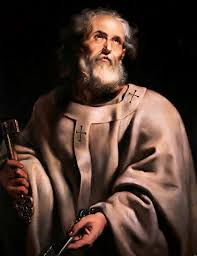
                                                                                                          

    The New Testament Apostles were chosen and sent by Jesus Christ, Himself. They were gifted by the Holy Spirit and their ministries were accompanied by “signs and wonders” (Hebrews 2:4). Their words and writings carried authority as “the word of God” as Paul says, “For this cause also thank we God without ceasing, because, when ye received the word of God which ye heard of us, ye received it not as the word of men, but as it is in truth, the word of God, which effectually worketh also in you that believe.” (1 Thessalonians 2:13) When the Apostles spoke in public discourse their words carried the same weight as their written word does for us today.

    A New Testament Apostle must have been with or seen the Lord Jesus Christ.

Again the Apostle Paul writes, “Am I not an apostle? am I not free? have I not seen Jesus Christ our Lord? are not ye my work in the Lord? ” (1 Corinthians 9:1) This is important as it goes along with what our Lord told His Apostles in John’s Gospel. There for instance He said, “Jesus answered them, Have not I chosen you twelve, and one of you is a devil? (John 6:70) and again, Ye have not chosen me, but I have chosen you, and ordained you, that ye should go and bring forth fruit, and that your fruit should remain: that whatsoever ye shall ask of the Father in my name, he may give it you.(John 15:16) These men were chosen as Apostles and were gifted with the Holy Spirit so that they could recall everything the Lord had taught them “But the Comforter, which is the Holy Ghost, whom the Father will send in my name, he shall teach you all things, and bring all things to your remembrance, whatsoever I have said unto you.” (John 14:26) This is directed to the 11 present and will be applied to the Apostle Paul as well. Not only so, but Jesus said, But when the Comforter is come, whom I will send unto you from the Father, even the Spirit of truth, which proceedeth from the Father, he shall testify of me: And ye also shall bear witness, because ye have been with me from the beginning. (John 15:26,27) These 11 would “bear witness” of the truth as they have been with Jesus “from the beginning”. Even more, I have yet many things to say unto you, but ye cannot bear them now. Howbeit when he, the Spirit of truth, is come, he will guide you into all truth: for he shall not speak of himself; but whatsoever he shall hear, that shall he speak: and he will shew you things to come. (John 16:12,13) Here we find that the Apostles were also prophets who were gifted with "foretelling". Some speak of themselves as prophets today and some mean as "forth-tellers" but there is a difference between "fore-telling" and "forth-telling" so I maintain that the use of the word prophet is confusing and misleading and should not be used of a modern day preacher!

    Later we find that the Apostles must choose a replacement for Judas who betrayed our Lord and here is what is written: “Wherefore of these men which have companied with us all the time that the Lord Jesus went in and out among us, Beginning from the baptism of John, unto that same day that he was taken up from us, must one be ordained to be a witness with us of his resurrection.” (Acts 1:21,22) and they chose Matthias for that roll. Note that one of the conditions for this apostleship was that the man had to have “companied with us”. But we should also consider that perhaps Matthias was chosen by men and not by God. The reason I say this is because there is a set number of Apostles in Scripture and that number is 12. We know the original 11, Judas being discounted, but we also know that Paul was of equal rank with the 11 so he would be considered the 12th. In Luke's Gospel we find " Ye are they which have continued with me in my temptations. And I appoint unto you a kingdom, as my Father hath appointed unto me; That ye may eat and drink at my table in my kingdom, and sit on thrones judging the twelve tribes of Israel. " (Luke 22:28-30) and in Revelation 21 we find " And the wall of the city had twelve foundations, and in them the names of the twelve apostles of the Lamb." (v.14) There are only 12 who own the Office of Apostle. They are the original eleven plus Paul. So while there are others who may be called messengers or apostles, in the sense of being sent ones, there are only 12 Apostles.

      Some will say, “Because Apostles are gifts to the church and we still have the church, we must therefore still have Apostles”. They use Ephesians 4:11-13 as a proof text. Here is what it says, “And he gave some, apostles; and some, prophets; and some, evangelists; and some, pastors and teachers; For the perfecting of the saints, for the work of the ministry, for the edifying of the body of Christ: Till we all come in the unity of the faith, and of the knowledge of the Son of God, unto a perfect man, unto the measure of the stature of the fulness of Christ:” But this text does not say that there would always be Apostles but rather that the overall “gifts” would be for the perfecting of the saints. Let’s look at another verse from Paul: “And God hath set some in the church, first apostles, secondarily prophets, thirdly teachers, after that miracles, then gifts of healings, helps, governments, diversities of tongues. Are all apostles? are all prophets? are all teachers? are all workers of miracles? Have all the gifts of healing? do all speak with tongues? do all interpret?  But covet earnestly the best gifts: and yet shew I unto you a more excellent way.” (1 Corinthians 12:28-31)The Apostle will go on to speak more about “gifts” but here he clearly points out that Apostles are first, then prophets, then teachers (called pastor/teachers) in Ephesians. But he also speaks of miracles, gifts of healings, helps and so on. If one insists that the church must still have Apostles then one must also insist that the church still has prophets (in the foretelling sense) and workers of miracles, healings, etc. and that is simply NOT the case.
                                                                            
      PURPOSE must be considered. What is the purpose for the Apostles? Well they were to be the foundational witnesses for Jesus Christ. They were gifted to recall the very words Jesus said, the things He taught. They were enabled to preach and write “all truth” in Spiritual matters. They were enabled as prophets to write about “things to come”. Paul writes in Ephesians, “Now therefore ye are no more strangers and foreigners, but fellowcitizens with the saints, and of the household of God; And are built upon the foundation of the apostles and prophets, Jesus Christ himself being the chief corner stone; In whom all the building fitly framed together groweth unto an holy temple in the Lord:  In whom ye also are builded together for an habitation of God through the Spirit.” (Ephesians 2:19-22) To anyone even moderately acquainted with building, that the foundation goes at the bottom of a building, not in the middle, and not at the top. The biblical Apostles were foundational, that was their purpose! There are no Apostles; there are no prophets, in the church today. We have the complete word of God and  Peter writes: “According as his divine power hath given unto us all things that pertain unto life and godliness, through the knowledge of him that hath called us to glory and virtue: ” (2 Peter 1:3) God be blessed forever. Amen!

Tuesday, August 28, 2012

Is Physical Healing Included in the Atonement?


Is pyhsical healing in the atonement? The short answer is “Yes!” But it is not as many espouse. The text usually used is found in Isaiah 53 where it reads, “Surely he hath borne our griefs, and carried our sorrows: yet we did esteem him stricken, smitten of God, and afflicted. But he was wounded for our transgressions, he was bruised for our iniquities: the chastisement of our peace was upon him; and with his stripes we are healed.” (Isaiah 53:4,5)

    This text concerns what the Lord Jesus Christ did on behalf of his elect from the foundation of the world, at the cross where he was rejected of men and smitten on account of the transgressions of  His elect, and for our iniquities. The text goes on to say that “by his stripes we are healed”. But does that mean that believers don’t get sick? Does that mean that, as some profess, “If you just have faith, in Jesus’ Name, the sickness will go away?" Well it’s pretty clear from history, the history of the world, and our own individual histories that something is wrong because people die, even good, sound, faithful Christians! Sometimes they die from old age and sometimes they’re afflicted with cancer or some other malady, but they die nonetheless and that’s a fact! And many are chronically ill, fighting such things as diabetes.

    The truth of the matter is that healing IS in the atonement…but physical healing is not, here and now included. When the text says that “by his stripes we are healed” there are two events in mind. First, when Christ died on the cross he took the sins and burdens of those He redeemed, His elect. But though we have been regenerated “made spiritually alive” and our souls have been redeemed, we are still awaiting the redemption of our bodies. Look what the Apostle Paul writes, “For we know that the whole creation groaneth and travaileth in pain together until now. And not only they, but ourselves also, which have the firstfruits of the Spirit, even we ourselves groan within ourselves, waiting for the adoption, to wit, the redemption of our body.” (Romans 8:22, 23)  So our souls have been redeemed yes, but our bodies are awaiting the fulfillment of that redemption promised. Not to fear though because every Christian is given the “earnest of the Spirit” to show that God’s promise will come to pass as is written: “In whom ye also trusted, after that ye heard the word of truth, the gospel of your salvation: in whom also after that ye believed, ye were sealed with that holy Spirit of promise, Which is the earnest of our inheritance until the redemption of the purchased possession, unto the praise of his glory.” (Ephesians 1:13, 14)

     THEN, “And God shall wipe away all tears from their eyes; and there shall be no more death, neither sorrow, nor crying, neither shall there be any more pain: for the former things are passed away.” (Revelation 21:4) I believe in healing here and now because God has a will for each of our lives and we ought to pray with His will  in mind. Sometimes He heals and sometimes he does not, and that is all a matter of his will. One thing we can be assured of is that the “healing” found in the atonement has “spiritually” taken place with every Christian and will eventually be “Physically” realized as well.

    Yet someone will say, “You just don’t have faith!”  Well, did the Apostle Paul have faith regarding his “thorn in the flesh”, regarding his eye problem? Why did he tell Timothy to take a little wine for his stomach’s sake? How about poor Trophimus who had to remain behind because he was sick? No, people get sick. Sometimes they get sick by disobedience and sometimes they are in full compliance and still get sick. Sometimes God uses sickness and even physical death as chastisement! We see this for instance in regards to those who partook of the Lord’s Supper without discernment of the Lord’s body and in pride and selfishness, “For this cause many are weak and sickly among you, and many sleep.” (1 Cor.11:30)

     Sometimes God allows disease or sickness or some physical limitations for His glory. Do you remember that man in John’s Gospel who was born blind? Look at this: “And as Jesus passed by, he saw a man which was blind from his birth.

     And his disciples asked him, saying, Master, who did sin, this man, or his parents, that he was born blind? Jesus answered, Neither hath this man sinned, nor his parents: but that the works of God should be made manifest in him.” (John 9:1-3)

    I believe what the Bible teaches but it does not teach “physical” healing, in the atonement, for this age of grace! We are waiting for our physical healing. In fact, I was just at a funeral today for a man who loved the Lord. He got sick; he died! One day his body will be caught up to glory and it will be eternally healed! Someday, all of my aches and pains will be gone, I’ll never shed a tear again, and I won’t have to wear glasses.

   If I get sick, pray for me, that’s part of God’s program. But don’t “name it and claim it” on my behalf, to me that’s presumptuous sin. Pray according to God’s will. After all, isn’t that the way we should be praying about all things?
And please don’t quote verses like Matthew 10: 6 “Heal the sick, cleanse the lepers, raise the dead, cast out devils: freely ye have received, freely give” Because I will probably ask you how many dead people you have raised up lately! Rightly divide the word of truth and you will not find yourself caught up in this sinful, presumptuous, and sometimes willful misuse of the word of God.

Thursday, August 23, 2012

True Spirituality

"If any man think himself to be a prophet, or spiritual, let him acknowledge that the things that I write unto you are the commandments of the Lord." (1 Corinthians 14:37)
   I've been hearing and seeing a lot of claims regarding spirituality from people who claim to be spiritual but also claim to be "free spirits" who are working toward getting in touch with their "divine self". Whenever I see these kind of claims I cringe because I know the person speaking is still lost and filled with the same Satanic foolishness as were Adam and Even when Satan told them, "For God doth know that in the day ye eat thereof, then your eyes shall be opened, and ye shall be as gods, knowing good and evil." (Genesis 3:5) They desired to be "as gods" and no wonder because all Satan's children seek the same thing. Satan himself wanted to be God, for he said, "I will ascend above the heights of the clouds; I will be like the most High." (Isaiah 14:14)
     Now there is a difference between our natural human spirit, which all human beings own, and that spirit which has been restored to communion with God. We all share a like human spirit which is why we can identify with one another. But this human spirit can never become divine! We do not seek to be gods, though we do seek godliness. Being godly is to be obedient to God's truth and God's will, it is not to seek its own apart from God. Paul tells us, "For what man knoweth the things of a man, save the spirit of man which is in him? even so the things of God knoweth no man, but the Spirit of God." (1 Corinthians 2:11) So, yes, we can intimately know the things of men because we have the spirit of man, but only the Spirit (Holy Spirit) knows the things of God. But Paul goes on to say, "Now we have received, not the spirit of the world, but the spirit which is of God; that we might know the things that are freely given to us of God." (1 Corinthians 2:12) Though Paul is speaking directly of himself and those traveling with him, this applies to all Christians because we are the habitation of the Holy Spirit-- "Know ye not that ye are the temple of God, and that the Spirit of God dwelleth in you?" (1 Corinthians 3:16)
    True Spirituality can only be found through faith in Jesus Christ! It is He who has opened the way for our human spirits to undergo a miraculous and radical change administered by the Holy Spirit! To claim spirituality by any other means is sheer foolishness! The Bible says, "There is a way which seemeth right unto a man, but the end thereof are the ways of death." (Proverbs 14:12) If you are one of those who believes you are spiritual outside the saving truth of Christianity you THINK you are right, but the end is not good!
    Let me take this a step farther. Even all Christians are not truly spiritual in their behavior. Positionally they have become spiritual beings but practically they are anything but... Paul wrote, "And I, brethren, could not speak unto you as unto spiritual, but as unto carnal, even as unto babes in Christ." (1 Corinthians 3:1) Here the Apostle is addressing a church that was filled with carnality. They were made positionally spiritual, but they were not acting like Christians should act. They were saved but they were not honoring God.
    The point is there is only one way to be spiritual. First, one has to be MADE SPIRITUAL through God's work of regeneration, bringing the soul that is "dead in trespasses and sins" (Ephesian 2:1) to life "quickened" (Ephesians 2:5) at which time the individual can exercise the "gift" of faith (Ephesians 2:8) and believe the message of the Gospel unto eternal life. Then, through the power of the indwelling Spirit of God, "If we live in the Spirit, let us also walk in the Spirit." (Galatians 5:25) 
    No doubt there will be some who think themselves spiritual who will pay no heed to what I have just told you and continue in your vanity. I can only say, the word of God is true; advance at your own peril!


Wednesday, July 25, 2012

But What About The People Who Have Never Heard?

   I get asked that title question quite frequently, mostly by young people as they are the ones who seem to care. Even with their youth they are already recognizing the inequities of life and tend to falsely apply those perceptions to the spiritual realm as well. So unless they have a strong background in the doctrines regarding faith and salvation they will often assume, and in their very question imply, that God is unfair and unjust in pronouncing condemnation upon some who never had a chance for salvation. And so I address that issue here by pointing out the errors and providing some answers.
   First of all, God is always just, all the time and it is only our misunderstanding of His justice that leads to error. The Scripture testifies, "He is the Rock, his work is perfect: for all his ways are judgment: a God of truth and without iniquity, just and right is he." (Deuteronomy 32:4) and our Lord Jesus Christ tell us, "Judge not according to the appearance, but judge righteous judgment." (John 7:24) Things are not always as they appear but God, who judges justly, can see things as they are. Our perception regarding this temporal world often don't apply to the spiritual world. What seems like injustice here MAY not be injustice at all spiritually.
   Second, we must understand the lost condition of EVERY man upon entry into this world.
The Bible says, "And you hath he quickened, who were dead in trespasses and sins; Wherein in time past ye walked according to the course of this world, according to the prince of the power of the air, the spirit that now worketh in the children of disobedience: Among whom also we all had our conversation in times past in the lusts of our flesh, fulfilling the desires of the flesh and of the mind; and were by nature the children of wrath, even as others." (Eph.2:1-3) The word "quickened" means to be made alive. Why were these believers made alive? Because they believed! They were formerly dead in trespasses and sins, which is the case of all mankind until such time as they are made alive. Not only were they "dead in trespasses and sins" but the chapter goes on to say "That at that time ye were without Christ, being aliens from the commonwealth of Israel, and strangers from the covenants of promise, having no hope, and without God in the world:" (Eph.2:12) Remember, this is the state of all mankind including you and me. If you have since trusted Christ as your Saviour things have changed but if you have not, this is your condition and there's only one way to change it! We can add verses like, "As it is written, There is none righteous, no, not one:" (Romans 3:10) or "For all have sinned, and come short of the glory of God;" (Romans 3:23) but I'm sure you get the point. All, that is every single person born into this world is born lost, dead in trespasses and sins, even if they die before they have had a chance to actually sin, death itself is proof that the stain of sin is upon the sinful soul.
     We also must consider God's Mercy and Grace and we are talking about that mercy and that grace extended to lost sinners so that they may be saved. I will limit my discussion to that mercy and that grace. It is God's Mercy toward His elect that brought Jesus Christ to the cross and it is His grace upon the elect that brings about our salvation. I will not spend much time here proving election or defending it as the reader can read my former posts for that. What I want to show here is simply that one cannot be saved without the Mercy which brought Christ to Calvary and the Grace that works faith in our salvation. For instance Peter writes, "Blessed be the God and Father of our Lord Jesus Christ, which according to his abundant mercy hath begotten us again unto a lively hope by the resurrection of Jesus Christ from the dead, To an inheritance incorruptible, and undefiled, and that fadeth not away, reserved in heaven for you,Who are kept by the power of God through faith unto salvation ready to be revealed in the last time." (1 Peter 1:3-5) and Paul writes, "For by grace are ye saved through faith; and that not of yourselves: it is the gift of God: Not of works, lest any man should boast. For we are his workmanship, created in Christ Jesus unto good works, which God hath before ordained that we should walk in them." (Eph.2:9-10) So we see then that Mercy and Grace were necessary to bring us to life from death and to give us the gift of faith so we could believe. Salvation then, is a gift from God to lost sinners who were dead in trespasses and sins, who didn't have Christ, were without hope, were without God and were deserving of the same end as all sinners. Mercy has often been explained as "God not giving us what we deserve" and Grace has been explained as "God giving us what we don't deserve". You see all mankind is on a wide road to destruction but it is by God's grace that He saves some, not out of respect to their person, and not because He sees some spark of goodness in them, and not because they chose Him but because He chooses us. I like these verses in John's Gospel, "But as many as received him, to them gave he power to become the sons of God, even to them that believe on his name: Which were born, not of blood, nor of the will of the flesh, nor of the will of man, but of God." (John 1:12,13 underline added) Jesus said, "Verily, verily, I say unto you, He that heareth my word, and believeth on him that sent me, hath everlasting life, and shall not come into condemnation; but is passed from death unto life." (John 5:24)S o we see that Sovereign God, by His mercy and His grace saves some out of the world and leaves others to the end rightly deserved. Our hearts should ALWAYS be thankful for His Grace and our lips should be filled with praise for His Goodness and Grace.
   Now, what about those who have never heard. There is a wonderful verse in Psalm 50 that says, "Whoso offereth praise glorifieth me: and to him that ordereth his conversation aright will I shew the salvation of God." (Ps.50:23) In the Book of the Revelation we find that "And they sung a new song, saying, Thou art worthy to take the book, and to open the seals thereof: for thou wast slain, and hast redeemed us to God by thy blood out of every kindred, and tongue, and people, and nation;"  (Rev.5:9 underline added) There is built within every man, even though he is spiritually dead, an ability to recognize the glory of God. Paul writes about it in Romans when he says, "Because that which may be known of God is manifest in them; for God hath shewed it unto them.For the invisible things of him from the creation of the world are clearly seen, being understood by the things that are made, even his eternal power and Godhead; so that they are without excuse: Because that, when they knew God, they glorified him not as God, neither were thankful; but became vain in their imaginations, and their foolish heart was darkened." (Romans 1:19-21) It is not that they can know God in any of His Persons, but they can acknowledge that there must be a God and recognize His power. Then, providing they recognize that power and the reality of God, God will then "show the way of salvation", just as He did Cornelius in the Book of Acts.
   I believe, therefore, that even though all men are lost sinners, born dead in trespasses and sins, are without God, without Christ, and with no hope, there is still an ability to recognize the reality of God. I'm not saying they will be saved, but I believe God will reveal the WAY of salvation to them, so that, in the end, of every kindred, and every tribe, and every nation, we will find those who found the WAY,  who were "born of God", and who will be kept forever by His power to enjoy their eternal inheritance.


Saturday, April 7, 2012

The Day the Lord Made

Note: This is an outline from a sermon preached April 1st for the evening service. I apologize for the way the blog distorts the outline.

"The Day the Lord Made"

Psalm 118:22-26

INTRO:  The resurrection of our Lord can be seen in the Old Testament as well as the New. It can be seen in the types, like the wave sheaf of the first fruits, the crossing of the Jordan River, Aaron’s rod that budded, and of course, Jonah for three days and nights in the belly of the great fish. Christ’s rejection, crucifixion, and resurrection can be seen in Old Testament references as well such as we have before us here this evening.

      This entire Psalm is Messianic in nature and was probably sung by our Lord Himself when He shared the last supper with His disciples as it was normally sung at the closing of the Pascal Feast. We all have read of the shouts of Hosanna from the people as our Lord rode into Jerusalem , which is the fulfillment of v.27 “Blessed be he that cometh in the name of the LORD: we have blessed you out of the house of the LORD.

  PROP: The Stone that was rejected is now the Head Stone.
    I.  The Stone Rejected
   II. The Stone Exalted
  III. The Stone Resurrected


Hear another parable: There was a certain householder, which planted a vineyard, and hedged it round about, and digged a winepress in it, and built a tower, and let it out to husbandmen, and went into a far country :And when the time of the fruit drew near, he sent his servants to the husbandmen, that they might receive the fruits of it. And the husbandmen took his servants, and beat one, and killed another, and stoned another.   Again, he sent other servants more than the first: and they did unto them likewise. But last of all he sent unto them his son, saying, They will reverence my son. But when the husbandmen saw the son, they said among themselves, This is the heir; come, let us kill him, and let us seize on his inheritance. And they caught him, and cast him out of the vineyard, and slew him. When the lord therefore of the vineyard cometh, what will he do unto those husbandmen? They say unto him, He will miserably destroy those wicked men, and will let out his vineyard unto other husbandmen, which shall render him the fruits in their seasons. Matthew 21:33-4I. THE STONE REJECTED- “The stone which the builders refused is become the head stone of the corner.” (V.22) This verse is cited no less than six times in the New Testament by Matthew, Mark, Luke, Peter
A. “Jesus saith unto them, Did ye never read in the scriptures, The stone which the builders rejected, the same is become the head of the corner: this is the Lord's doing, and it is marvellous in our eyes?”  (Matthew 21:42) This follows a parable about the Householder andthe husbandmen.
B. “And have ye not read this scripture; The stone which the builders rejected is become the head of the corner: This was the Lord's doing, and it is marvellous in our eyes?” (Mark 12:10,11) This as well, follows the same Parable.
C. “And he beheld them, and said, What is this then that is written, The stone which the builders 
rejected, the same is become the head of the corner? Whosoever shall fall upon that stone shall be broken; but on whomsoever it shall fall, it will grind him to powder.” (Luke 20:17,18) This as well, follows on the heels of the same parable.
D. “This is the stone which was set at nought of you builders, which is become the head of the
corner.  Neither is there salvation in any other: for there is none other name under heaven given among men, whereby we must be saved.” (Acts 4:11,12) This is part of Peters address to the Sanhedrin after the healing of the lame man at the Beautiful Gate. Peter had told them  “Be it known unto you all, and to all the people of Israel, that by the name of Jesus Christ of Nazareth, whom ye crucified, whom God raised from the dead, even by him doth this man stand here before you whole.” (v.10) NOTE: In each of these cases, the verses from Psalm 118 are quoted in reference to the rejection of Jesus Christ. He is the Stone that was disallowed!

II. THE STONE IS EXALTED- “The stone which the builders refused is become the head stone of the corner. This is the  LORD'S doing; it is marvellous in our eyes.” (vs.22,23)It excites wonder.
A. What Jesus Said- “Therefore doth my Father love me, because I lay down my life, that I might take it again. No man taketh it from me, but I lay it down of myself. I  have power to lay it down, and I have power to take it again. This commandment have I received of my Father.”  (John 10:17,18) The Stone was rejected and His life was never beyond His control. Though men played a role due to the condition of their hearts, they would have been powerless had He resisted.
B. What Peter Preached- “Ye men of Israel, hear these words; Jesus of Nazareth, a man approved of God among you by miracles and wonders and signs, which God did by him in the midst of you, as ye yourselves also know: Him, being delivered by the determinate counsel and foreknowledge of God, ye have taken, and by wicked hands have crucified and slain: Whom God hath raised up, having loosed the pains of death: because it was not possible that he should be holden of it.”  (Acts2:22-24)  Again, men are held responsible for their actions, yet at the same time the entire plan of salvation  is the work of God, it is the Lord’s doing and it is marvelous in our eyes!
C. What Paul Wrote: “Let this mind be in you, which was also in Christ Jesus: Who, being in the form of God, thought it not robbery to be equal with God: But made himself of no reputation, and took upon him the form of a servant, and was made in the likeness of men: And being found in fashion as a man, he humbled himself, and became obedient unto death, even the death of the cross. Wherefore God also hath highly exalted him, and given him a name which is above every name: That at the name of Jesus every knee should bow, of  things in heaven, and  things in earth, and things under the earth;  And that every tongue should confess that Jesus Christ is Lord, to the glory of God the Father.” (Phil.2:5-11)

III. THE STONE RESURRECTED- “This is the day which the LORD hath made; we will rejoice and be glad in it.” (v.24) In order to be exalted Christ must first be rejected and resurrected.
A. It Is a Day the Lord Hath Made- The Lord’s Day- it's he LORD'S doing, and it is the LORD'S day!
B. It Is a Day to Rejoice and Be Glad-
1. It Refers to the Entire Dispensation Wherein We Live- It's new; it's unique and it gives us reason to rejoice as we consider the grace of God and His disposition towards all He has chosen.
2. It Refers to the Special Day Wherein We Honor the Lord- the 1st day of the week.
              Conclusion: See 1 Peter 2:1-9

Friday, March 16, 2012

Limited Atonement or Particular Redemption

    The third representation in the word T.U.L.I.P. is described as Limited Atonement. Some prefer to call it Definite Atonement or Particular Redemption. This doctrine is, among the five points of Calvinism, the most difficult for many to digest. It just rubs against our religious grain to consider that Jesus Christ's death was on behalf of a particular number and not for all mankind. I remember a conversation with a man who was upset with this teaching and he said, "I want my children to be saved. I just can't abide the idea that some are chosen to salvation and some are not!" He didn't realize it, of course, but what he was actually saying is that he believed his influence and his instruction to his children would be the determining factor in whether or not they would be saved! He was, in fact, not trusting God to meet his desire.  I knew another man, who had been in the ministry in holiness churches for a number of years, who would get physically sick for that same reason. So, admittedly this is difficult for some people but it is, nevertheless, Biblical teaching. Before we address this doctrine let me do a little review of what we have covered thus far. When I say covered I don't mean that we have in any way exhausted the discussion. I often think that most writers who talk about these things give far more information than their readers are able to digest so when I use the word "covered" I mean it relatively!
                                                                                     
    We have talked about Total Depravity or Total Inability and we found that all are born sinners. In fact, all are "dead in trespasses and sins" and are "without God" , "without Christ", and "having no hope" unless God works a miracle of regeneration or "spiritual quickening". So we determined that because of this inability to "change our spots" so to speak, we have no hope of salvation except for the insinuation of God.
     We also spoke of Unconditional Election by which is meant that God, being no respecter of persons, selects those of His choice without any consideration of merit, to reap the benefits of His saving grace. We found that God will have mercy on those Whom He chooses and He will pass over, all others giving them  their just deserts, rather than saving by His Grace (Romans 9). In the case of Pharaoh we are told that he was raised up for the distinct purpose of demonstrating God's justice.
     So, since man is incapable of saving himself. And since because of being "dead" spiritually, he is incapable of working towards salvation, and since He can in no way influence God Who is no respecter of persons it necessarily follows that there is a limited redemption. By using the word limited we do not mean that the sufficiency of Christ's sacrifice is in question for we all understand that the precious blood of our Lord Jesus Christ is sufficient for the salvation of all men. By using the word "limited" we mean that a limited number of souls are in view as the recipients of Christ's offering.
    There are basically three views we can take:
  • That Christ's death was an actual atonement for all men, and so all men will be saved. This of course is rejected because we all know all men will not be saved. This idea is called Universalism.
  • That Christ's death does not actually save anyone, but makes it possible for all if they will co-operate with God. This is the most popular view among Christians today. So Christ's death provides the basis for salvation but that Christ cannot save apart from the correct response from the sinner.
  • That Christ's death is an actual atonement for a limited number of the elect and that Christ's offering is both sufficient and efficient. In this view Christ actually saves his elect and they are not cooperative, but are saved by Grace through Faith.
     Of course it is this last view that we hold dear here. I like to say that when I sing "Jesus Saves, Jesus Saves" I really mean it! We know that John's Gospel teaches that there are those, who are considered separate from the world, whom God the Father has given the Son. And of these that the Father gives the Son, each will come to Jesus, having been drawn of the Father, and of which none shall be lost, and in fact, without the loss of a single one, will be raised up at the last day! (See John 6) By this chapter alone we know that there are some who are separated from others. That some belong to the Father and will be given to the Son. This means that there is a limited number who are set aside for Christ.
    The question then is, "For whom did Christ die?" and some will readily answer, "For all men.", which presents several problems:
  • If we take a verse like "He that spared not his own Son, but delivered him up for us all, how shall he not with him also freely give us all things?" (Romans 8:32) for instance we immediately have a problems. For one, the use of the word "for" which, in most cases will either mean because of or on the behalf of  or in the place of and we must determine by either the context or the particular word used to make our determination.  The word in question is the Greek word huper which carries two intrinsic meanings: 1.In the place of; 2. For the benefit of, and these two cannot be divided. The second problem is that we must seek out whether the "all" means all without exception or whether it means all of a specific number. At this point I will add two quotes from David Huckabee from his study on the word "all". First, "'All' is another good Bible word that is seriously misunderstood by many students of Scripture, for most people assume that it is a word that is totally unlimited, but such is not the case at all. Not only is it not unlimited in its meaning in some of its usages, it is not absolutely unlimited in any of its usages, and to think so is to show a tragic ignorance of its grammatical usage." and the second, "Always and without exception "all" modifies a noun, pronoun, verb, adjective or adverb, and is limited to that word, and it is never used with "men" in a salvation context." (Davis Huckabee, Studies In Strong Doctrine, Appendix 4) If we use words like for and all properly we will not fall into the trap of using it to mean all without exception or totally unlimited.
  • The second word that is almost always misunderstood is the word world. Again, it is pointed out that there are at least fourteen different usages of the word world in the Bible. In John's gospel the word world (kosmos) is used in at least three different applications so when we get to a verse like "For God so loved the world, that he gave his only begotten Son, that whosoever believeth in him should not perish, but have everlasting life." (John 3:16) we will run into serious contradictions if we take the world to mean all mankind, for clearly it cannot mean that. Again, "And if any man hear my words, and believe not, I judge him not: for I came not to judge the world, but to save the world." (John 12:47) we find that for the world to apply to every man is simply not acceptable! We'll note that there is a distinction between the world and Christ's elect, for instance, "Now before the feast of the passover, when Jesus knew that his hour was come that he should depart out of this world unto the Father, having loved his own which were in the world, he loved them unto the end. " (John 13:1). I could go on but I simply want the reader to know that study is necessary.
  • Charles Spurgeon, Defender of Limited Atonement
    The next thing we must consider is the implications of words like propitiation. When we use the word propitiation we mean, basically, that the justice of God has been satisfied by the atoning sacrifice of our Lord Jesus Christ. Jesus was, not only the Person, but also the Place of propitiation when He paid the full penalty for the sins of His elect, and God's wrath was propitiated. In other words God accepted Christ's payment on behalf of His elect. This is important because if we say that Christ's sacrifice was for (on behalf of and in the place of) all men, then we find ourselves right back to universalism. Even in our court system a man cannot be tried for the same crime twice! If Christ died on behalf of all men and all men benefit eternally from His death, then would God not be unjust to condemn unbelievers when their sins have been taken away?

     I will be the first to admit that there are some verses that seem, upon a surface reading, to imply that Christ's death was for all men but if we still to context, and if we investigate the usage of words like all, we will find that in every case, the meaning becomes clear. So, does all men mean all men without exception? or does it mean all (all kinds of) men? or does it mean all of a particular group? and that is the question to be solved! See for instance 1 Timothy 2:1-4 where the context clearly means "all kinds", not just poor and disadvantaged, but kings as well. Another example is 2 Peter 3:9 where God promises that not a single one of His elect will perish. There is absolutely no way we can make this to me all men!
     You may ask, "What then does 'whosoever' will mean?" It means just exactly what it says! You see, as I explained under Total Depravity, when God regenerates His elect, gives them the gift of faith, He also makes them willing! (We'll talk about his more under Irresistible Grace). So we have no argument with "whosoever will", in fact, it shows God's election in changing the wills because most men WON'T!
     Due to my own rule about keeping these posts simple I must contain my remarks. So, as we look at these doctrines we must agree that they all work together in a synergistic way. To reject any of these first three doctrines that I have talked about is to confuse the whole. The same can be said of the two to follow. I rejoice in the sovereignty and wisdom of God, and I am glad to receive both His mercy and His grace. Moreover, I am glad to know that He has chosen me, not from any merit found within me, but according to His own will and purpose. Will you trust Jesus Christ to be your Savior today? Will you admit yourself a sinner in need of the Blessed Saviour? All of the benefits of God's grace can be yours today if you will be a "whosoever". My hope is that God will bless!

Sunday, March 11, 2012

The Doctrine of Reprobation


 Determining at which point to address this issue is difficult. But since it fits with either Unconditional Election or Limited Atonement I choose to address it here. The Doctrine of Reprobation is often misunderstood to mean that God has predestined some people to eternal punishment. This is simply not true. The word "reprobate" basically means castaway or unapproved. Doctrinally in means that while some are elected to the glory of God, others are passed over to the Glory of God!
     When we consider the condition of the unsaved and that the Scripture says, "As it is written, There is none righteous, no, not one: There is none that understandeth, there is none that seeketh after God. They are all gone out of the way, they are together become unprofitable; there is none that doeth good, no, not one." (Romans 3:10-12); "For all have sinned, and come short of the glory of God;" (Romans 3:23) and "And you hath he quickened, who were dead in trespasses and sins; Wherein in time past ye walked according to the course of this world, according to the prince of the power of the air, the spirit that now worketh in the children of disobedience:" (Ephesians 2:1,2); "That at that time ye were without Christ, being aliens from the commonwealth of Israel, and strangers from the covenants of promise, having no hope, and without God in the world:"  (Ephesians 2:12); and "He that believeth on him is not condemned: but he that believeth not is condemned already, because he hath not believed in the name of the only begotten Son of God."  (John 3:18), we can see that all men are in a lost condition, condemned already, without Christ, without God, and having no hope. Here is a case where all means all. We also learn that there are none righteous, that there are none doing good, that none are seeking God, and that without the quickening Spirit of God they will be left dead in trespasses and sins and considered children of disobedience.

     When Paul makes his argument concerning God's choices regarding whom will be the objects of His mercy he tells us that we have no right to object to God's choices! Paul writes, "Nay but, O man, who art thou that repliest against God? Shall the thing formed say to him that formed it, Why hast thou made me thus? Hath not the potter power over the clay, of the same lump to make one vessel unto honour, and another unto dishonour? " (Romans 9:20,21) And then he follow with this: "What if God, willing to shew his wrath, and to make his power known, endured with much longsuffering the vessels of wrath fitted to destruction: And that he might make known the riches of his glory on the vessels of mercy, which he had afore prepared unto glory, Even us, whom he hath called, not of the Jews only, but also of the Gentiles?" (vs.22-24)
     The truth is that all men are sinners. All human beings, born into this world, are born under sin and each and every one will be guilty of practicing sin as well. So we are all "condemned already" (John 3:18) and have, but for the mercy of God, "no hope" ((Ephesians 2:12). But God, according to his plan and purpose, chooses some to Himself, having no respect of persons, but, as a potter creates a vessel of honor and a vessel of dishonor out of the same clay, God, by His Divine Appointment elects some to the praise of His Glory.
    God is not obligated to elect all. I tend to look at it through this lens: "Enter ye in at the strait gate: for wide is the gate, and broad is the way, that leadeth to destruction, and many there be which go in thereat: Because strait is the gate, and narrow is the way, which leadeth unto life, and few there be that find it. Because strait is the gate, and narrow is the way, which leadeth unto life, and few there be that find it." (Matthew 7:13,14) Let's face it, no one can clearly comprehend the mind of God. We only know what He tells us in His word. As I look at this doctrine I see all of mankind as on that wide road that leads to destruction, but I see a God of Grace reach down and pull me from that wide path. The he gently places me in the narrow way. It is all of grace.
     You may say, "Wait a minute, who determines why one deserves salvation and another does not if it's all God's choice?" That's just the point! No one deserves salvation, that's why the Bible teaches salvation is by Grace through faith! Secondly, it is God who makes that determination as Paul clearly points out, "So then it is not of him that willeth, nor of him that runneth, but of God that sheweth mercy." (Romans 9:16)
     The Doctrine of Reprobation then, is that Biblical teaching that God chooses some to salvation and leaves others on the wide road that leads to destruction. You may have questions like "Should not God just shew mercy to all?"or "Wouldn't it be fair to save by merit rather than Grace?" I will leave you to work these questions out with God, but let me just add that God is just in all His works!And, as for the attitude of the elect, we all know that God is merciful in not giving us our just deserts, but that He is most gracious in giving us what we do not deserve.


Friday, March 9, 2012

Unconditional Election: God's Sovereign Choice!


     The first doctrine we looked at in the acrostic T.U.L.I.P. was Total Depravity and we described it as total inability. That is, man, being dead in trespasses and sins, owns a will that is servant to his intellect, which itself cannot know God, will not seek God, does not want God, and therefore is "without God"; "without Christ", and "having no hope". Since then, we are in this state of inability, a miracle must be performed in order for us to "arise!" out of death's chambers and come to the Lord. That miracle takes place with some people and does not take place with others. That brings us to Unconditional Election!
     Let me say first, that election cannot be denied! God is in the business of choosing and He does so according to His will. God chose Noah from all the people of the world; and God chose Abraham out of a heathen land (Genesis 12). God chose Israel out of all the surrounding nations to be His people (Exodus 19). God chose tribes out of Israel to serve Him as He willed. God chose Jacob over Esau at birth, before either could do good or bad (Romans 9:11-13).  Jesus Christ chose twelve out of all others and He chose three of the twelve for His inner circle.
     You see, God chooses! God chose for his Apostles to go north rather than south, west rather than east and even forbade Paul to go in another direction. God chooses which spiritual gifts He gives to His followers and divides them severally. God is a God who chooses. It can easily be seen that God chooses or elects nations, individuals, and gifts. The question that is most likely to be argued is NOT whether God chooses or elects, that's undeniable, but whether this election is conditional or unconditional.
     By establishing the truth of Total Inability we have shown that man cannot do anything to elect himself to God's pleasure. Because he is spiritually dead his will is subject to his intellect and will only choose that which he deems as either pleasurable or in some other way beneficial to himself. So that tends to narrow the discussion! Let's look at one of the more powerful passages in the Scripture, though there are probably hundreds of them:
"Rom 9:6 Not as though the word of God hath taken none effect. For they are not all Israel, which are of Israel: Rom 9:7 Neither, because they are the seed of Abraham, are they all children: but, In Isaac shall thy seed be called. Rom 9:8 That is, They which are the children of the flesh, these are not the children of God: but the children of the promise are counted for the seed. Rom 9:9 For this is the word of promise, At this time will I come, and Sara shall have a son. Rom 9:10 And not only this; but when Rebecca also had conceived by one, even by our father Isaac; Rom 9:11 (For the children being not yet born, neither having done any good or evil, that the purpose of God according to election might stand, not of works, but of him that calleth;)
Rom 9:12 It was said unto her, The elder shall serve the younger.
Rom 9:13 As it is written, Jacob have I loved, but Esau have I hated.
Rom 9:14 What shall we say then? Is there unrighteousness with God? God forbid.
Rom 9:15 For he saith to Moses, I will have mercy on whom I will have mercy, and I will have compassion on whom I will have compassion.
Rom 9:16 So then it is not of him that willeth, nor of him that runneth, but of God that sheweth mercy.
Rom 9:17 For the scripture saith unto Pharaoh, Even for this same purpose have I raised thee up, that I might shew my power in thee, and that my name might be declared throughout all the earth.
Rom 9:18 Therefore hath he mercy on whom he will have mercy, and whom he will he hardeneth"

     Here we see that God chose Abraham, Isaac, and Jacob and Paul argues that all of this election is according to God's will and purpose. God even chose Pharaoh as an example of God's power and sovereignty. God has mercy on those whom He chooses; and whom He wills He hardens. And there is absolutely nothing external from God that influences His choice!
     In John's Gospel, and throughout John's Gospel, there is a clear separation between the world and the elect. There is also a clear division between the world, Israel, and the elect. In John chapter one we find : "Joh 1:10 He was in the world, and the world was made by him, and the world knew him not. Joh 1:11 He came unto his own, and his own received him not. Joh 1:12 But as many as received him, to them gave he power to become the sons of God, even to them that believe on his name: Joh 1:13 Which were born, not of blood, nor of the will of the flesh, nor of the will of man, but of God." (John 1:10-13) Here we see that there are those who become children of God through no force other than God. They are separate from the world and they are separate from the Jews. Their birth is through the regenerating power of God and it cannot be willed, or inherited, or in anyway manipulated by man. It is all of God and these are God's elect!
     In Acts we find this verse, "And when the Gentiles heard this, they were glad, and glorified the word of the Lord: and as many as were ordained to eternal life believed." (Acts 13:48) Here we find Paul and Barnabas preaching the good news of Jesus Christ and certain believed. Who were they that believed? They were those who were ordained (appointed; chosen) to eternal life? Why did not others? Because they are left to themselves. I plan on talking about the doctrine of reprobation next installment.
                                                                              
    God chooses some to salvation out of a mass of people. It is His right to choose just as it is the Potter's right to determine the vessels he will make. It may be difficult for us to grasp it in its fullest sense but the fact still remains, God elects!
    Again, in John's Gospel we find: "All that the Father giveth me shall come to me; and him that cometh to me I will in no wise cast out. For I came down from heaven, not to do mine own will, but the will of him that sent me. And this is the Father's will which hath sent me, that of all which he hath given me I should lose nothing, but should raise it up again at the last day. And this is the will of him that sent me, that every one which seeth the Son, and believeth on him, may have everlasting life: and I will raise him up at the last day." (John 6:37-40) Here we find that every one who is given to the Saviour is given by the Father and that not a single one of these will be lost. And verse 44 says, "No man can come to me, except the Father which hath sent me draw him: and I will raise him up at the last day."  So every one who comes to the Savior is given by the Father and drawn to the Son by the Father. One cannot come to Christ through the working of his own limited will. He will not come because he will not choose what does not appeal to the flesh. He is worldly, fleshly and fitted for this world. He is on a wide road that leads to destruction along with most of humanity. But some, those who the Father gives to the Son, will not only come to the Son but will be raised up, without a single loss, at the last day!
   I can foresee someone protesting, "What about John12:32 where Jesus says, 'And I, if I be lifted up from the earth, will draw all men unto me.'  Yes, but it is clear from the context that there were "certain Greeks" (v.20) desired to see Jesus. They fit into the "all" because here "all" means "all kinds". In other words our Lord will draw all kinds of men, even Greeks!

     God is in the business of choosing yet "without respect of Persons" for the Scripture says, "For there is no respect of persons with God" (Romans 2:11). The Bible makes statements similar to this several times and it means that God makes His sovereign choices with no respect of persons. Most Christian believe in salvation by grace through faith and they will usually agree that grace means unmerited favor, or something meaning the same thing. Yet, at the same time the cannot bring themselves to bow to God on the matter of election! So, while on the one hand they agree that salvation is all of grace and they recognize grace means unmerited favor, they still hold to the concept that God does NOT elect without first recognizing something in the individual that makes him worthy of saving! This is MASS CONFUSION! If you believe, as you have been taught, that God chooses because he foreknows who has some spark of merit in him, then you do not believe in salvation by grace alone! By the way, for God to foreknow is dependent upon His decree!
    I am completely aware that so much more can, and probably should be said, but since this is a simple blog I'm trying to keep it SIMPLE! Remember, all five points of Calvinism make a whole so if you believe in the T you must believe the U. If you agree in the Total Depravity of man, meaning his utter helplessness in getting to and pleasing God, then you MUST accept Unconditional Election!
All Glory to God; May God Bless!